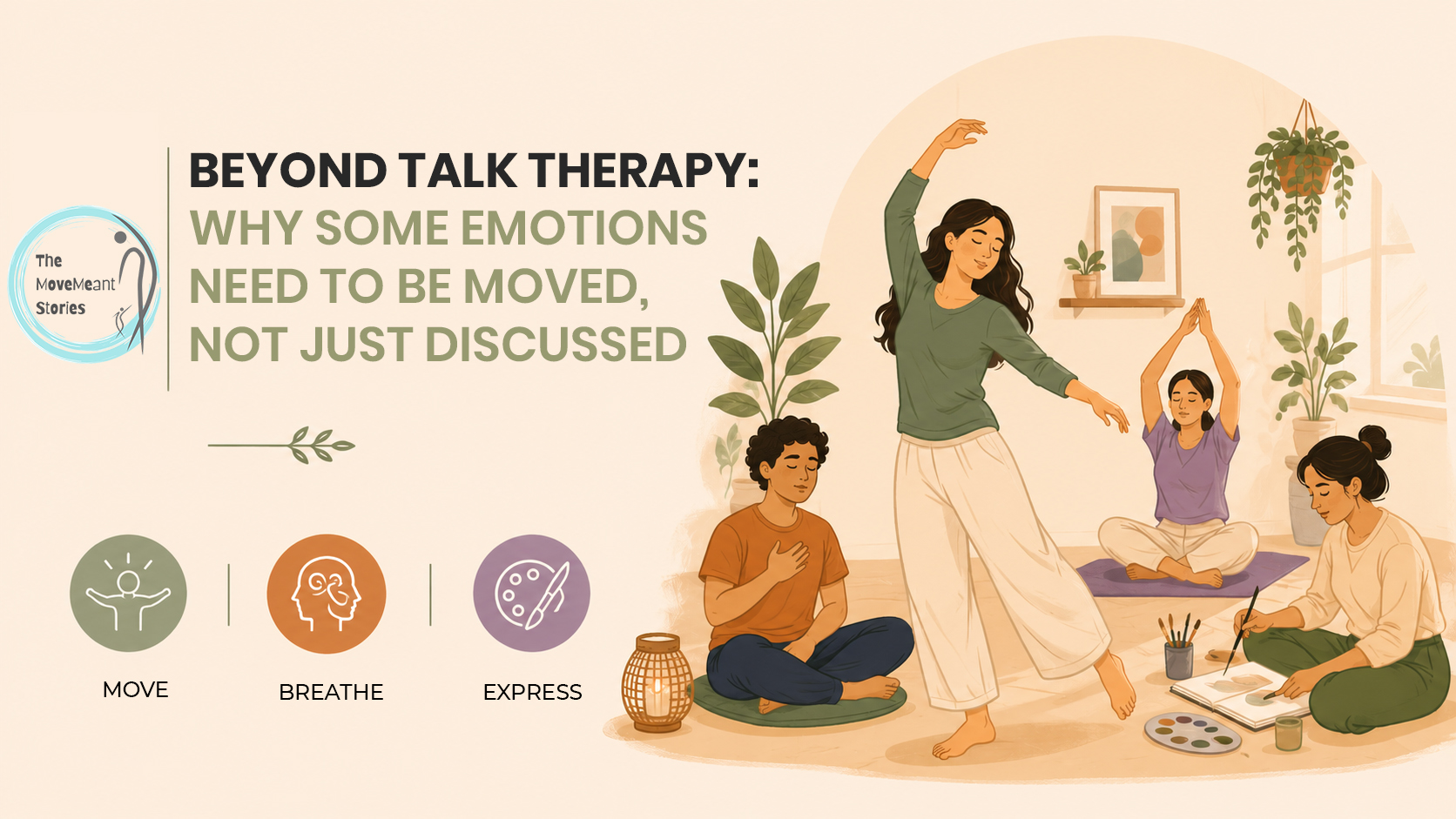
From practice, it has been proven that in terms of mental health care, speech alone cannot cope with all the feelings that a person may have. In addition to talk therapy, body-oriented and creative methods are also used. The stress management therapy in Mumbai at The Movemeant Stories can be an ideal spot for you.
Research shows that stress and trauma not only affect our minds but also get stored in our bodies. For this reason, activities such as movement, breathing techniques and other creative practices help to express the feelings that are difficult to put into words.
Table of Contents:
- Why do some emotions stay in the body even after talking about them in therapy sessions?
- What types of body-based or movement therapies are used to support emotional healing?
- Is there scientific evidence that movement can help release stored stress or trauma?
- How does somatic or expressive therapy support long-term emotional recovery?
Why do some emotions stay in the body even after talking about them in therapy sessions?
Sometimes when you talk about feelings in therapy, the feeling might stay in your body because feelings are not only in your mind; they are in your body. The depression treatment supports when a person feels stressed, scared and traumatised, the body reacts with a tension response.
The talking cure of therapy helps people understand their feelings, but sometimes it doesn’t get to the tension in the body. Most trauma-informed theories emphasise that tension reactions can be stored in the body, even after talking about the incident.
What types of body-based or movement therapies are used to support emotional healing?
In the treatment of mental health, with emotional support therapy, body and movement therapies are used to help people in emotional healing, in cases where the person experiences difficulty talking about the issues they are experiencing verbally. These kinds of therapies are based on the idea that stress and trauma are stored in the body. Therapists trained in this field use a number of techniques to help patients relieve tension, relax and balance their emotions.
Here are some of the most common body and movement therapies in practice today:
- Somatic Therapy: Using body awareness to help release stress and trauma.
- Dance or movement therapy: This involves doing some guided movement to express one’s emotions.
- Yoga therapy: It includes breathing techniques and physical postures to help reduce stress.
- Breathing Techniques: These techniques help to relax and calm your mind and body.
- Grounding techniques: These help a person to focus on the present.
The therapy will be done by our expert therapists under proper care and instruction. Let your emotions flow and release all your stress.
Is there scientific evidence that movement can help release stored stress or trauma?
Of course, there is increasing research evidence about how movement can help release stress and trauma. Studies of trauma-informed care and somatic therapy demonstrate that emotions affect the mind and nervous system.
After stress or trauma, the body will be tight or in an “alert” mode for a long time. Professional practitioners use yoga, dance therapy, breath work and other simple exercises aimed at movement as therapies to relax the nervous system.
These techniques are useful for managing emotions and reducing anxiety. They are still being researched today, but are quite popular in modern mental health care.
How does somatic or expressive therapy support long-term emotional recovery?
Somatic and expressive therapy helps with the physical and psychological aspects of the problem and also aids in long-term emotional recovery. These kinds of therapies are built on the idea that stress and trauma are not only connected to our thoughts but also to the experiences of the body. Therapists can equip clients with the tools to work through emotional experiences physically.
How somatic therapy or expressive therapy helps in recovery:
- Releases body tension: It helps to reduce the stress experienced on a physical level.
- Increases self-awareness: It aids individuals in observing the physical signs of emotions.
- Calms the nerves: It supports the nerve system and reduces anxiety.
- Motivates to express: It helps express feelings in a better way, especially for people who cannot explain much through words.
- Enhances skills for coping: It supports people to manage their daily stress in a better way.
You can take support and help if you are feeling overwhelmed. We are here to guide with our best therapists at The Movemeant Stories.
Conclusion
In short, somatic and expressive treatments help to feel better with the help of mind-body treatment. Their purpose is to reduce stress and induce calm. Engaging in these kinds of therapies with us can assist you in starting the journey to good mental health with a professional guide.
FAQs
What is “beyond talk therapy”?
So it’s not just talking but different kinds of creativity like physical exercises, breath work or whatever else.
Why are some emotions not healed by talking?
Stress or trauma can affect your physical body as well as your thoughts or words.
What are moving emotions?
It is about using body movements, breath or any kind of expression to discharge emotions.
