About Dance/Movement Therapy
Dance/Movement Therapy (DMT) is the psychotherapeutic use of movement to strengthen the emotional, mental, physical, and social integration of individuals. It begins with a simple understanding: the body carries stories the mind may not have words for. Through movement, those stories find space to be expressed, released, and transformed. DMT is not about learning steps or perfecting technique — it is about listening to the body, following its natural impulses, and allowing movement to become a bridge between what we feel and how we express.
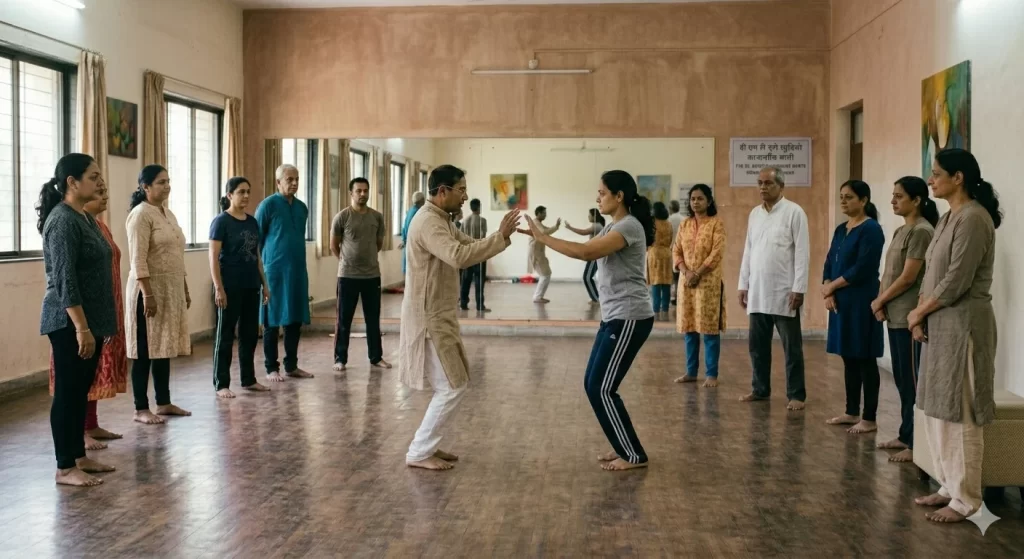
Because the body stores stress, joy, memories, and unspoken emotions, movement helps open pathways to clarity and calmness. It supports the nervous system, balances stress-related hormones, enhances motor coordination and spatial awareness, and deepens the mind–body connection. This makes DMT especially meaningful for those who struggle to verbalize their feelings or feel disconnected from themselves. Through guided movement and creative exploration, individuals learn to recognise their emotional patterns, understand their body’s signals, and discover new ways of moving through life.
Here, expressive movement takes precedence over performative movement: the focus is on authenticity rather than aesthetics, on revealing inner truth rather than entertaining. As the inner landscape unfolds through self-exploration and emotional awareness, expressive movement gives that truth form and visibility, turning art into therapy and therapy into art.
Sessions are guided with trauma-informed intention, cultural sensitivity, and a gentle respect for each person’s comfort and pace. The aim is to create a space where psychological calm and physical safety naturally emerge, allowing participants to open up, express, and heal in ways that feel organic and empowering.
Fundamentally, Dance/Movement Therapy works because the mind and body are inseparable, because movement is our most primal language, and because healing is not only something we think — it is something we feel, express, and grow into.